Winning the Future of Industrial Search: Why Your Company Must Dominate Google, Bing, and AI Engines
Search has always been the backbone of the manufacturing buying cycle. Whether an engineer is troubleshooting a dispensing challenge, a procurement manager is evaluating vendors, or a semiconductor fab is researching new automation solutions, the journey inevitably begins with a query typed into a search bar.
For your manufacturing company, this reality creates both an opportunity and a mandate: to win the future, you must win search.
But the definition of “search” is changing fast. Google remains the king, Bing quietly dominates corporate environments, and AI engines like ChatGPT and Gemini are rapidly becoming the preferred interface for the next generation of engineers. To stay ahead, your company must build a strategy that dominates traditional search while expanding aggressively into AI-driven visibility.
The Search Landscape: Still Ruled by Google, but No Longer Alone
Google continues to command the overwhelming majority of global search traffic. For industrial buyers, it is the default starting point—the place where they validate vendors, compare technologies, and begin RFQ processes. That makes Google Search the single most important battleground for your manufacturing company.
Yet ignoring Bing would be a mistake. In corporate environments—especially those running Windows and Microsoft Edge—Bing is often the default search engine. Engineers at semiconductor fabs, EMS companies, and aerospace manufacturers frequently never change these defaults. That makes Bing Search a critical secondary channel.
And then there is AI.
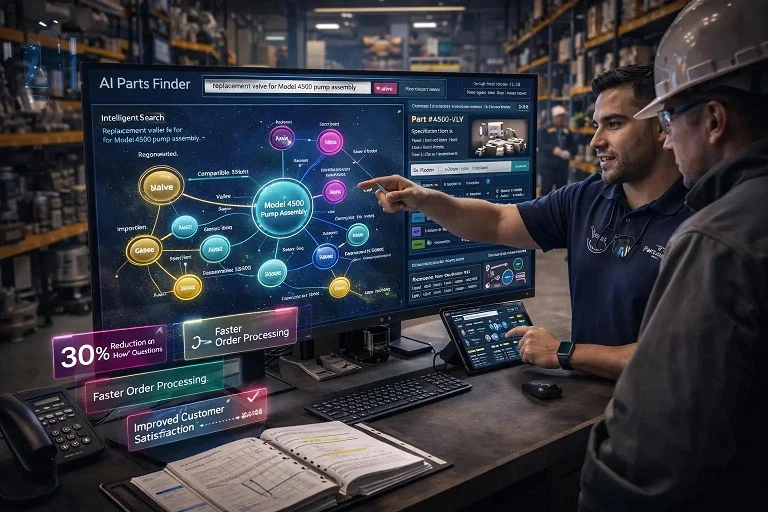
ChatGPT now owns more than half of the standalone AI chat market. Google Gemini and AI Overviews are rapidly evolving. Younger engineers increasingly ask AI tools for recommendations instead of typing into a search bar. This shift means AI search is no longer optional—it’s the next frontier.
Competitors Are Spending Big — Your Company Must Spend Smarter
Your competitors, especially public companies with deep pockets, are investing heavily in digital visibility. Outspending them outright may be unrealistic—but out-targeting them is absolutely achievable.
Let’s take, for example, a company that primarily targets organisations in the USA involved in electronics manufacturing and semiconductor industries.
Geo-targeting allows your company to focus its budget where buyers actually exist:
- Silicon Valley
- Arizona (TSMC, Intel)
- Texas (Texas Instruments, Samsung Austin)
- Eastern Corridor (Boston and New York/New Jersey electronics clusters)
Even more powerful is company-level targeting. By focusing ads on headquarters and manufacturing ZIP codes for top EMS companies, semiconductor fabs, and industry-specific OEMs, your company can ensure its budget reaches the highest-value prospects.
This is where geo-fenced search campaigns become a force multiplier.
Keyword Domination: Queries That Drive Manufacturing Buyers
Industrial search terms—especially those related to dispensing, coating, and semiconductor assembly—are expensive. CPCs often range from $8 to $25. To dominate these terms, your company must build a keyword strategy that prioritises:
- High-intent manufacturing queries
- Competitor conquesting
- Long-tail engineering queries
- Industry-specific problem-solving terms
Based on market research, dominating search in this niche requires a structured spend model, typically $8k–$20k per month depending on aggressiveness and competitive pressure.
A search share-of-voice model can determine the exact investment needed to outrank competitors.
Tracking the Long Manufacturing Buying Cycle
Manufacturing deals often take 12–24 months to close. Without proper tracking, digital attribution becomes nearly impossible. Your company should implement:
- CRM lead tagging
- Multi-touch attribution
- Offline conversion tracking
This ensures every RFQ, engineering evaluation, demo request, and sample enquiry is tied back to the search campaign that initiated it.
AI Visibility: The New Battleground for Industrial Influence
AI engines are becoming the second search engine—especially for younger engineers and procurement teams. When someone asks ChatGPT, “Who makes the best precision dispensing equipment?”, the AI generates what appears to be the perfect recommendation. That recommendation is based on:
- What your website says
- What other websites say about your company

- ChatGPT advertising
- Gemini optimisation
- PR Newswire or Business Wire distribution targeted to your industry
- Industry partnership content
- Search ads that appear above AI citations
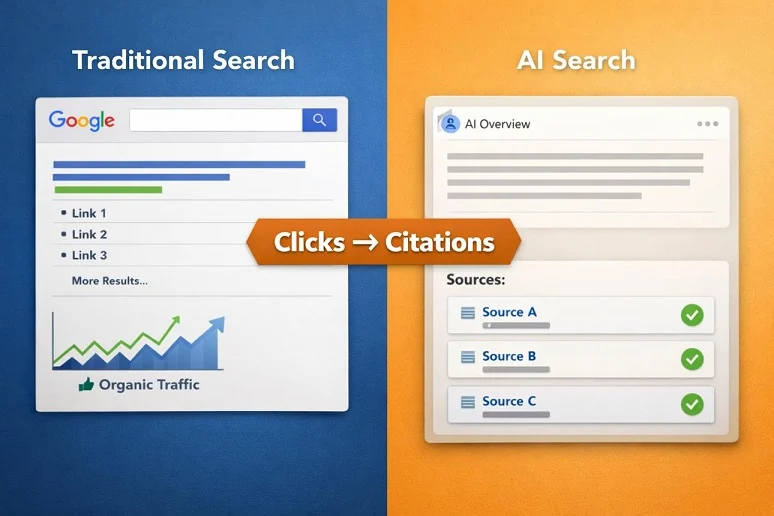
These channels feed AI engines the authoritative citations they rely on when generating recommendations.
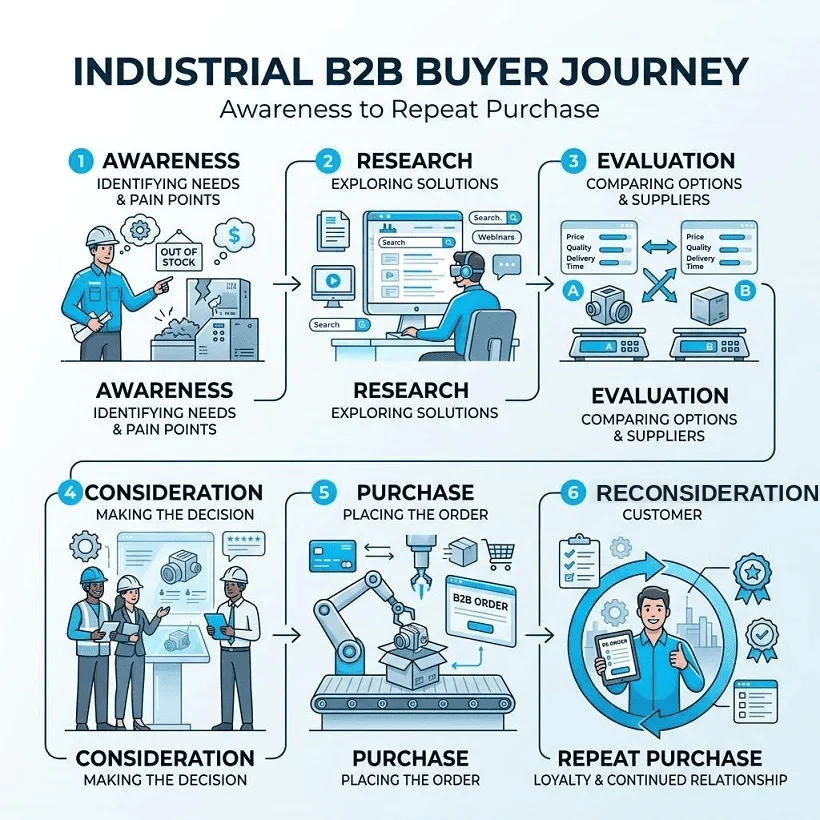
The Future Buyer Journey: Search → AI → Brand
The next generation of buyers will follow a new path:
Search on Google or Bing.
Ask AI for recommendations.
Receive the “perfect” suggestion.
Evaluate your brand directly.
To win this journey, your manufacturing company must dominate both traditional search and AI-driven visibility.
Industrial Search Conclusion: The Era of “Google It” Is Evolving — Your Company Must Evolve With It
“Google it” isn’t going away. But today’s college graduates—tomorrow’s engineers and procurement leaders—will increasingly rely on AI tools to make buying decisions. They will ask detailed questions and expect accurate, trustworthy answers.
If your manufacturing company wants to be the perfect answer, it must dominate both search and AI visibility.
The companies that consistently appear in AI recommendations will win the next decade of manufacturing procurement.
Author Biography

 SEO for Manufacturing B2B