Hilltop Algorithm & LLMs: Why a 2003 Search Algorithm Still Echoes in Modern AI Reasoning
Search engines and large language models (LLMs) seem like entirely different technologies. One retrieves documents; the other generates text. But beneath the surface, both systems rely on surprisingly similar principles: authority, context, relevance, and consensus.
The Hilltop algorithm—introduced by Google in 2003—was designed to identify expert pages on a topic by analyzing how authoritative sites link to each other. Modern LLMs, meanwhile, determine results by analyzing patterns across billions of tokens of text.
Despite the technological gulf between them, both systems ultimately try to answer the same question: “What information is most trustworthy, relevant, and representative of expert consensus?”
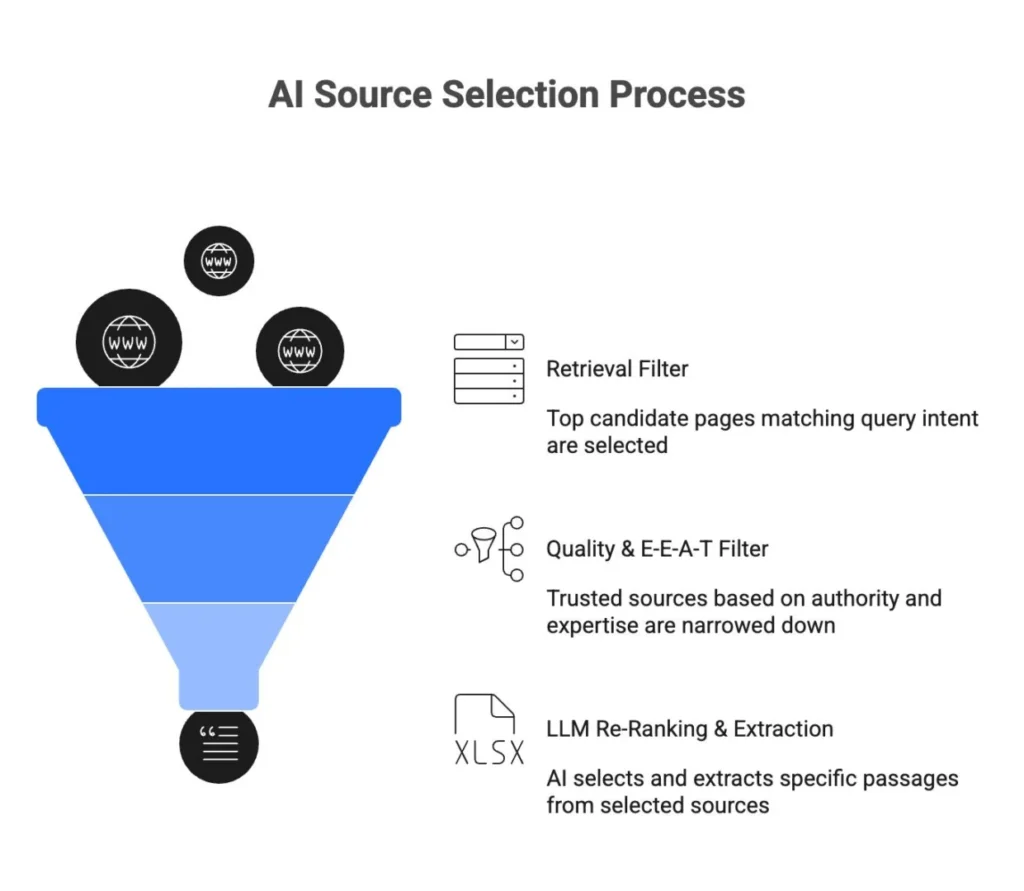
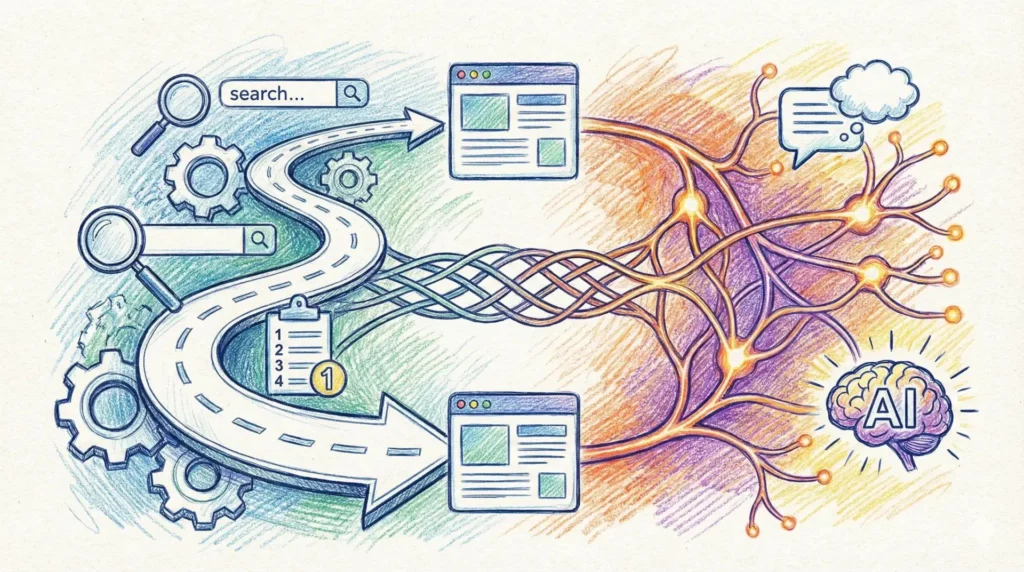
This following article explores how Hilltop works, how LLMs determine results, and why their underlying logic overlaps more than most people realize.
What the Hilltop Algorithm Was Designed to Do
Hilltop was built to solve a specific problem: Search engines needed a way to identify expert pages on a topic—not just popular ones.
Google described Hilltop as a way to surface:
“pages that are authorities on a given topic.”
Hilltop did this by analyzing hub pages—sites that link to many other authoritative sites. If multiple independent hubs pointed to the same page, Hilltop treated that page as an expert source.
Key components of Hilltop:
-
Expert pages — pages recognized as authoritative on a topic
-
Hub pages — pages that link to many experts
-
Independent corroboration — multiple unrelated hubs pointing to the same page
-
Topic relevance — links must be contextually relevant
Hilltop didn’t just count links—it evaluated the quality and independence of those links.
How LLMs Determine Results
LLMs like GPT‑4, Claude, or Gemini don’t use links at all. Instead, they analyze patterns in massive text corpora to determine:
• Which ideas co‑occur
• Which statements are supported across many sources
• Which explanations are most typical of expert writing
• Which phrasing best matches the user’s intent
LLMs don’t “look up” answers. They synthesize them based on statistical relationships across billions of documents.
Key components of LLM reasoning:
• Token probability — predicting the next most likely word
• Context windows — determining relevance based on surrounding text
• Consensus patterns — identifying ideas repeated across many sources
• Semantic similarity — matching user intent to known patterns
LLMs don’t evaluate links—but they do evaluate patterns of agreement, which is conceptually similar to the Hilltop algorithm model.
Where Hilltop and LLMs Overlap
Despite being over 20 years apart, Hilltop and LLMs share several core principles.
1. Authority Through Consensus
Hilltop Algorithm: Authority is determined by multiple independent hubs pointing to the same page.
LLMs: Authority is determined by multiple independent texts expressing the same idea.
Both systems reward agreement across diverse sources.
2. Topic‑Specific Expertise
Hilltop Algorithm: A page is authoritative only within a specific topic.
LLMs: A response is generated based on topic‑specific patterns in the training data.
Both systems avoid treating general popularity as universal expertise.
3. Relevance Filtering
Hilltop Algorithm: Only links relevant to the query topic matter.
LLMs: Only tokens relevant to the prompt context influence the output.
Both systems use context windows—Hilltop’s is link‑based; LLMs’ is semantic.
Where Hilltop and LLMs Overlap (continued)
4. Independence Matters
Hilltop Algorithm: Two hubs owned by the same entity don’t count as independent corroboration.
LLMs: Two texts repeating the same idea from the same source don’t strengthen consensus.
Both systems try to avoid single‑source bias.
5. Emergent “Expertise” Without Human Judgment
Hilltop: Expert pages emerge automatically from link structures.
LLMs: Expert‑like answers emerge automatically from statistical patterns.
Neither system “knows” what an expert is—yet both infer expertise from structural signals.
Where Hilltop and LLMs Differ
Of course, the differences are significant.
Hilltop Algorithm:
• deterministic
• link‑based
• topic‑specific
• designed for ranking documents
LLMs:
• probabilistic
• text‑based
• generative
• designed for producing language
But the philosophical overlap remains: Both systems try to identify trusted, relevant, consensus‑supported information.
Conclusion – The Hilltop Algorithm’s Similarities to Modern AI Reasoning & Why The Comparison of Hilltop vs. LLMs Matters Today
Understanding the Hilltop Algorithm helps explain why LLMs behave the way they do:
• They both reward consensus, not novelty.
• They both elevate expert‑like sources.
• They both rely on patterns of endorsement.
• They both struggle with rare or contradictory information.
• They both can be manipulated by synthetic consensus (link farms vs. content farms).
In many ways, LLMs are the natural evolution of the ideas Hilltop pioneered—moving from link‑based authority to semantic authority.
The Hilltop algorithm and modern LLMs may seem worlds apart, but they share a deep conceptual similarity: both systems attempt to surface the most authoritative, relevant, and consensus‑supported information available.
Hilltop did this through expert hubs and link structures. LLMs do it through statistical patterns and semantic similarity.
Both approaches reflect the same underlying truth: Expertise emerges from the structure of information—not from any single source.
Author Biography
 Author Bio
Roland Girouard
Roland brings over 25 years of experience in Internet marketing, having started SEO even before Google existed. One of his favorite SEO readings of all time is the Hilltop Algorithm. Today, Roland’s company specializes in B2B strategies, collaborating with clients on SEO, GEO, AIO, and content marketing to deliver measurable results – with roots that run deep in B2B marketing for manufacturing. Roland has also had SEO success spanning industries such as real estate, industrial machinery, hospitality, financial and legal services. Roland’s broad expertise ensures every project achieves strong, results‑driven outcomes through his company SEO 1A. He also enjoys fishing and golfing, volunteers as a youth baseball & soccer coach, and remains actively committed to his faith.